What makes it distinct
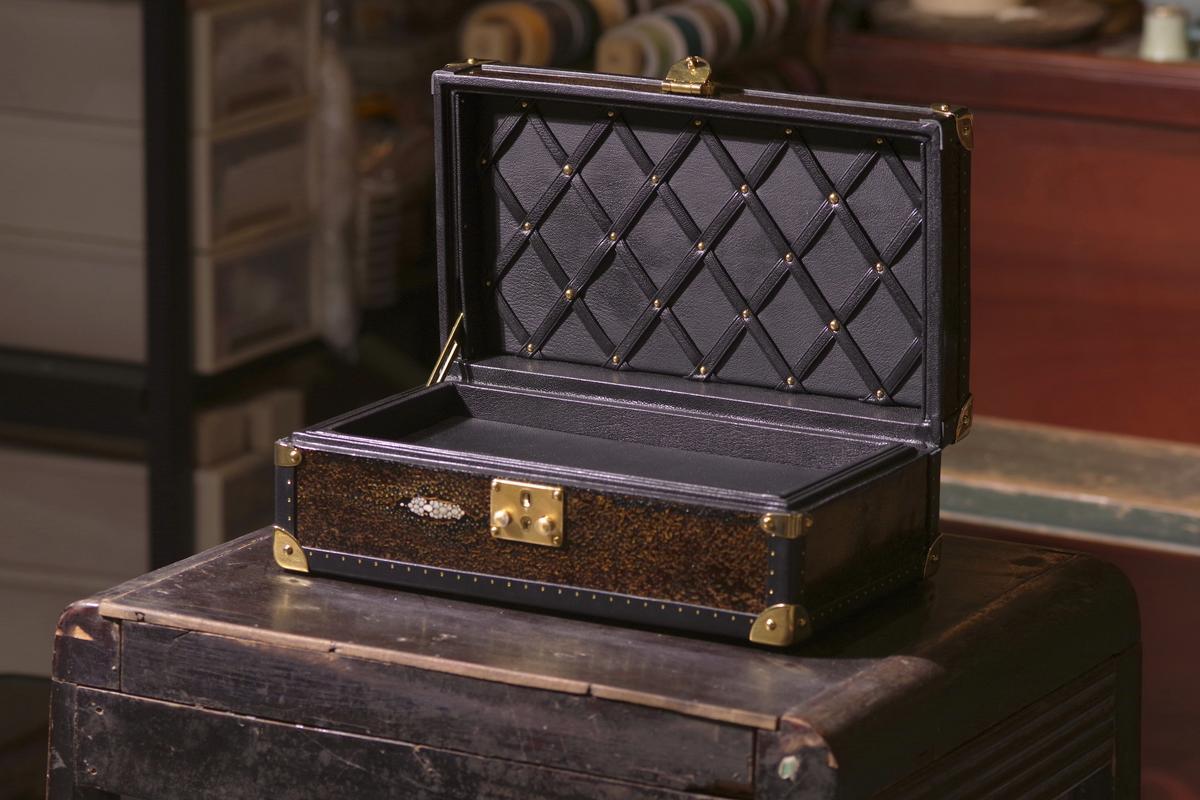
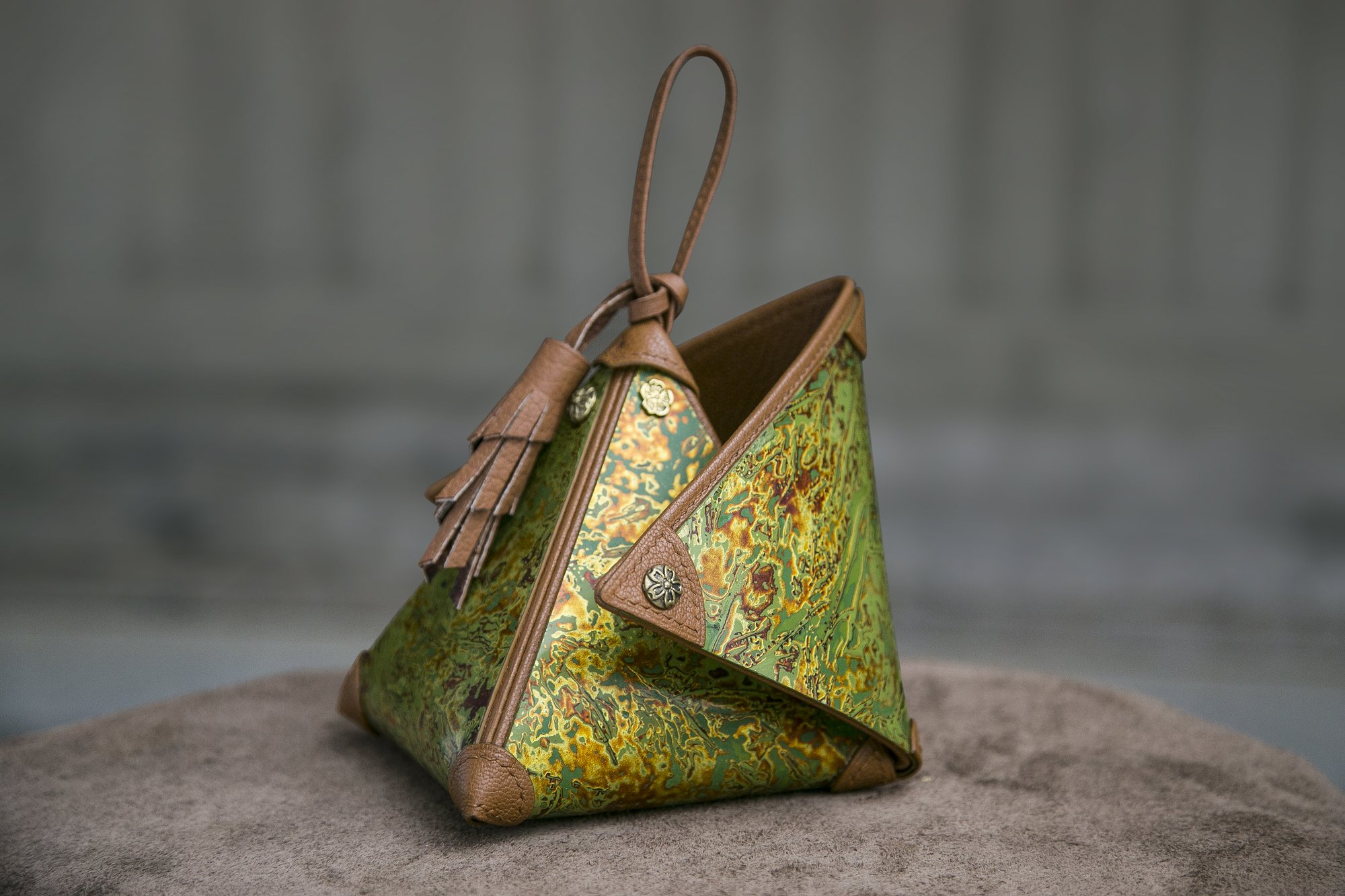
This is not simply lacquer applied to a finished leather object. Structure, leather covering, seams, ground layers, lacquer, hardware and curing have to be considered as one making system. Leather is both a functional skin and a flexible body; lacquer protects and transforms its surface while retaining traces of handwork and material.
The trunk is the craft’s historic form, but contemporary practice also tests the same relationship at other scales: bags, boxes, pillows, small utensils and experimental works.
A working outline of the process
The current archive summarises ten core stages. Individual works vary, and this outline is an introduction rather than a making manual.
- Select and prepare materials.
- Build the structural frame.
- Cut the leather to the form.
- Bond leather and structure.
- Close and stitch the edges.
- Prepare the ground layers.
- Apply lacquer in repeated cycles.
- Fit locks and metal hardware.
- Cure under controlled conditions.
- Allow the finished object to air before use.
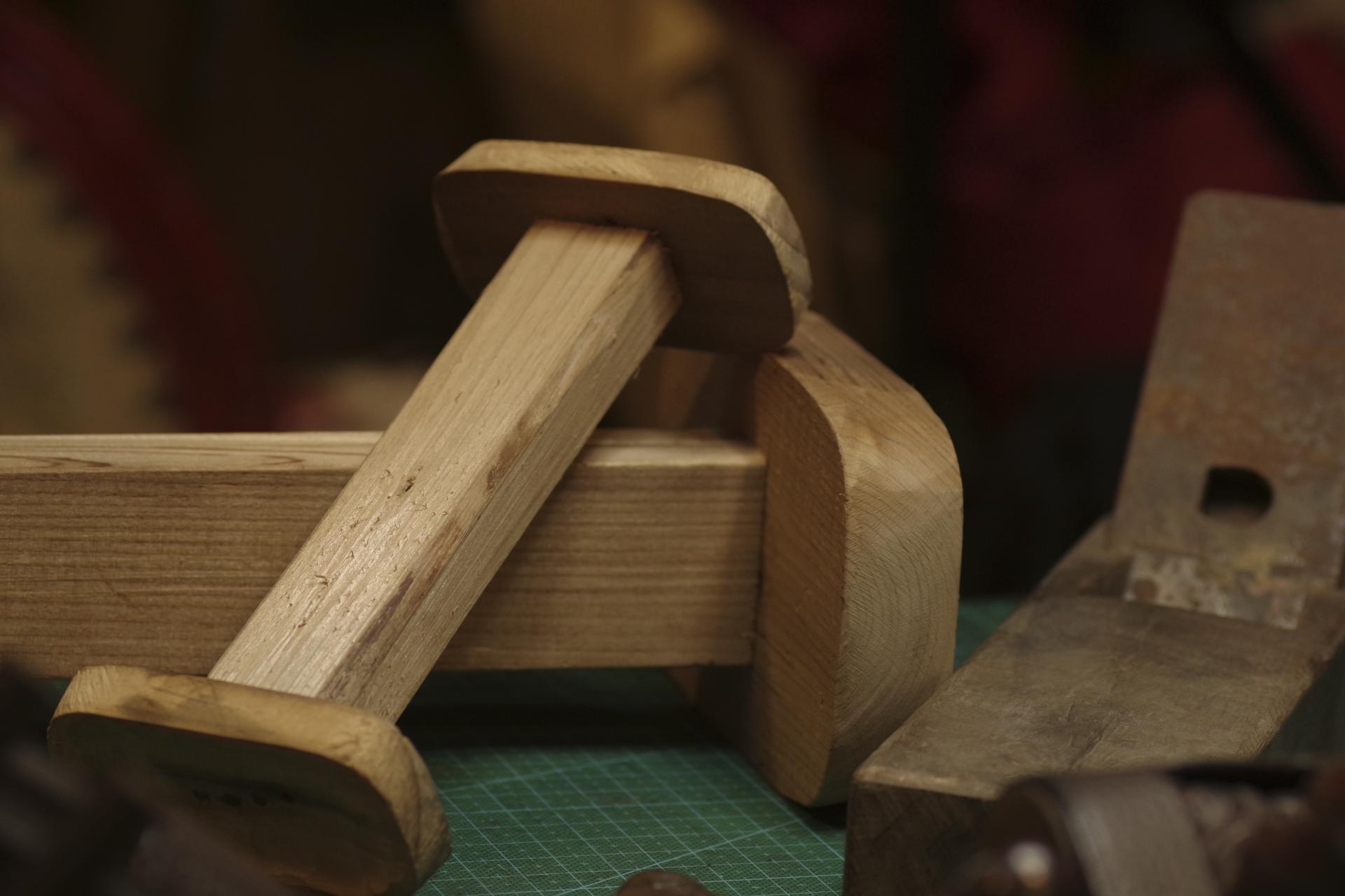
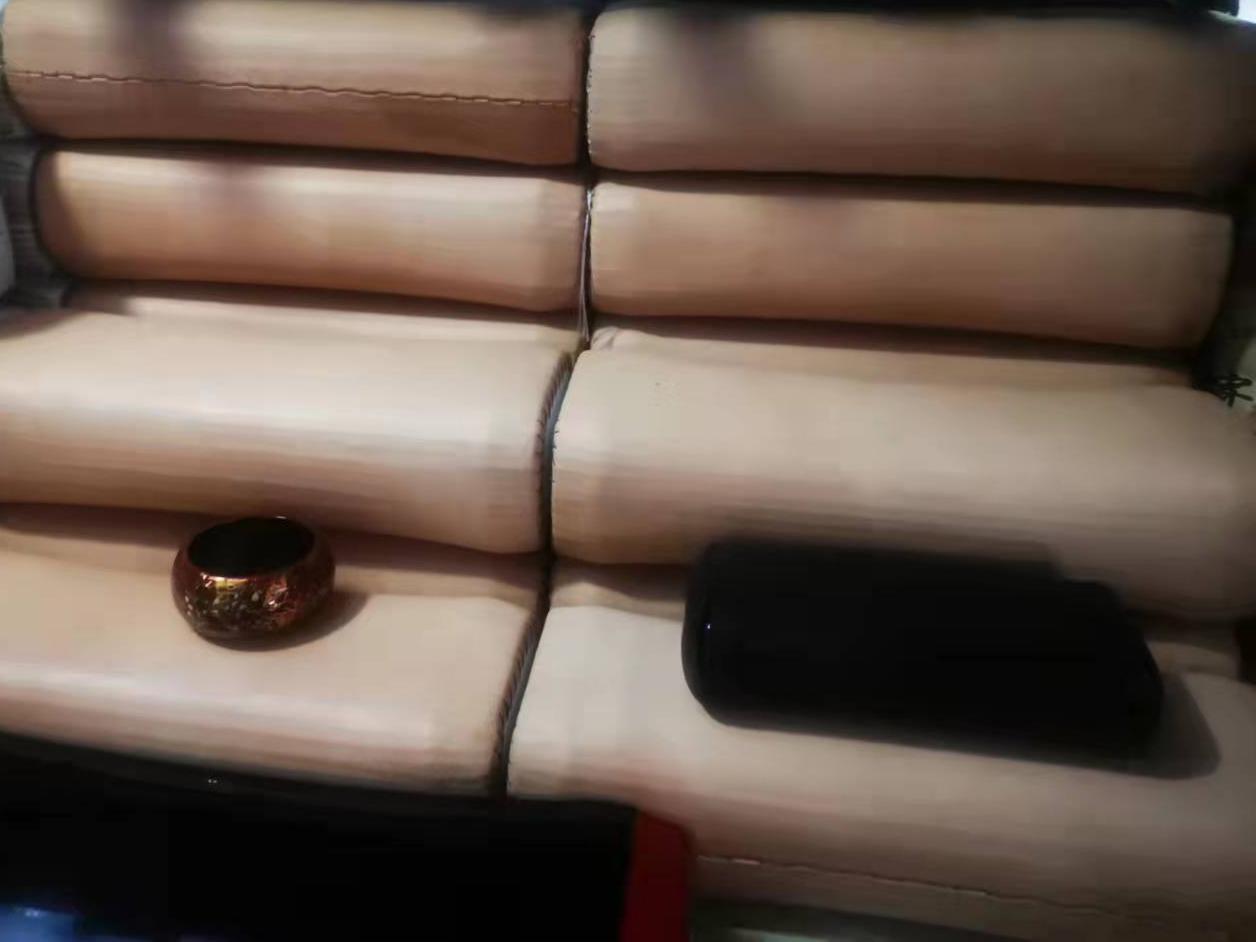
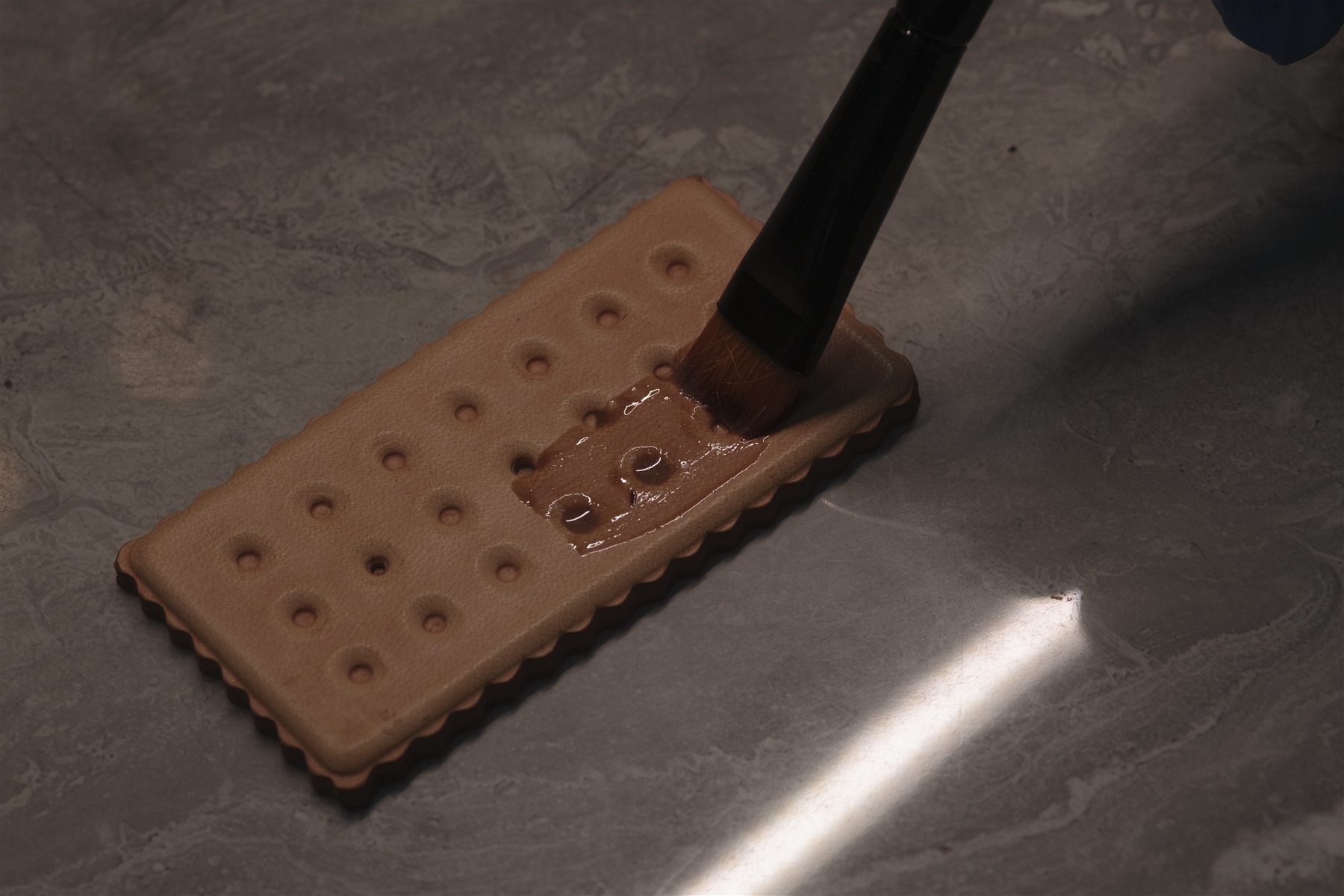
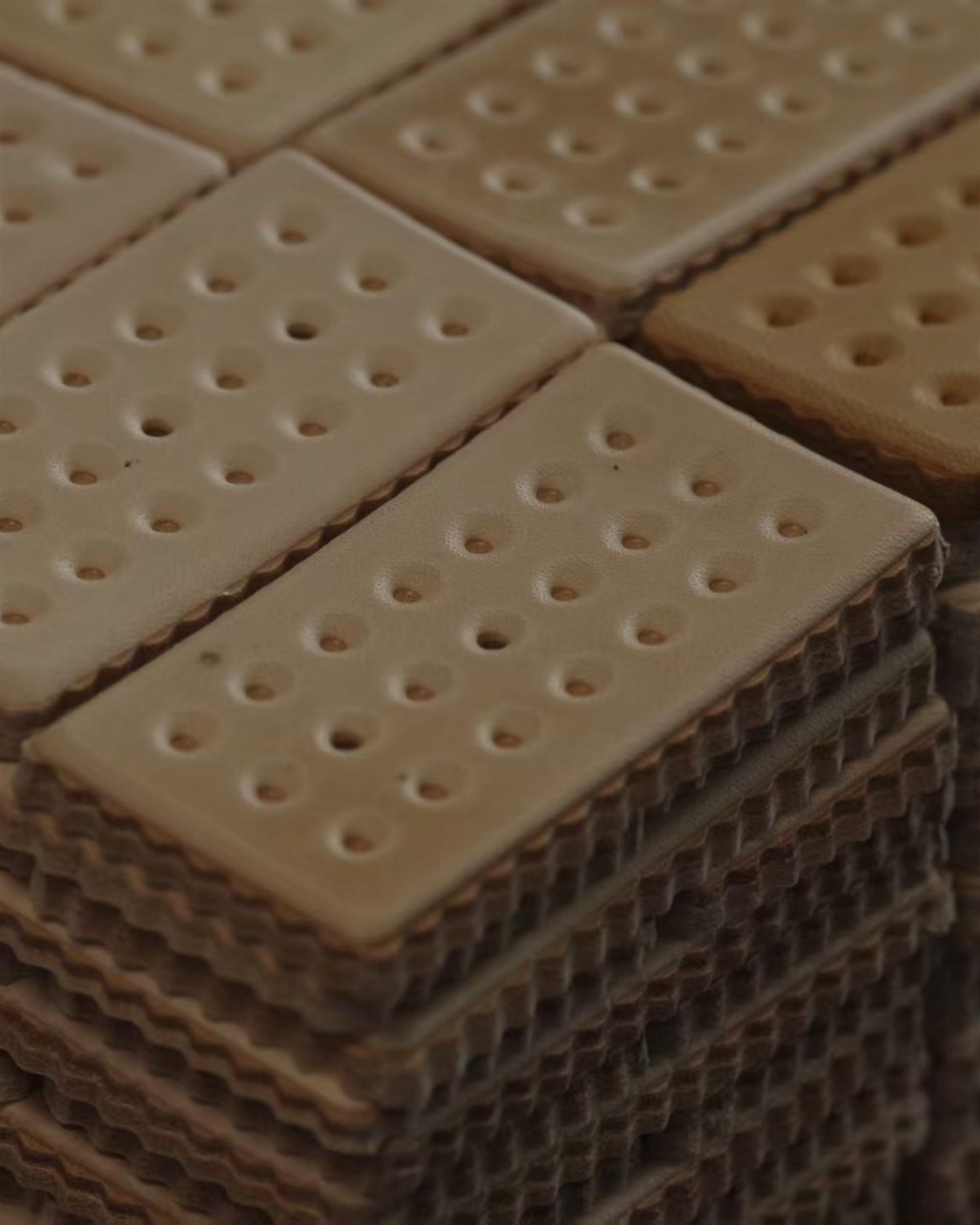
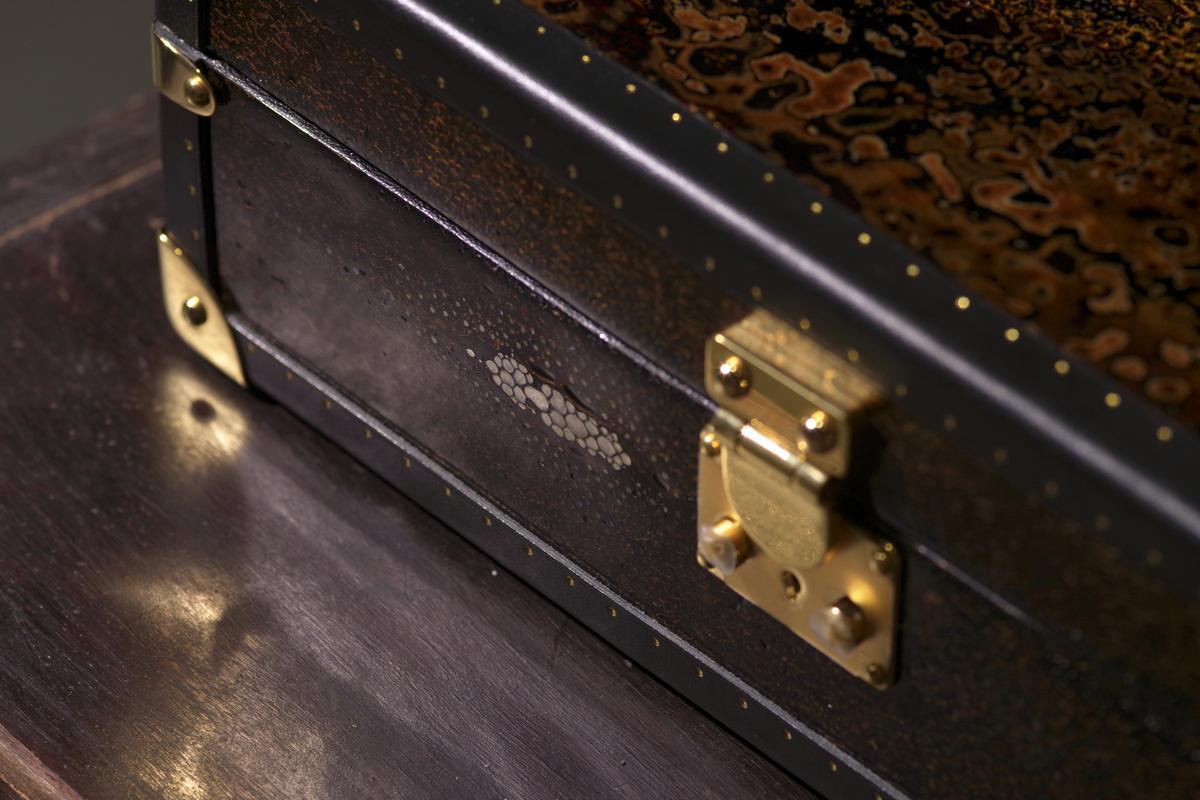
The photographs below come from different contemporary works. They show recurring relationships between structure, leather, lacquer and curing; they are not one universal step-by-step manual.

Lineage and public recognition
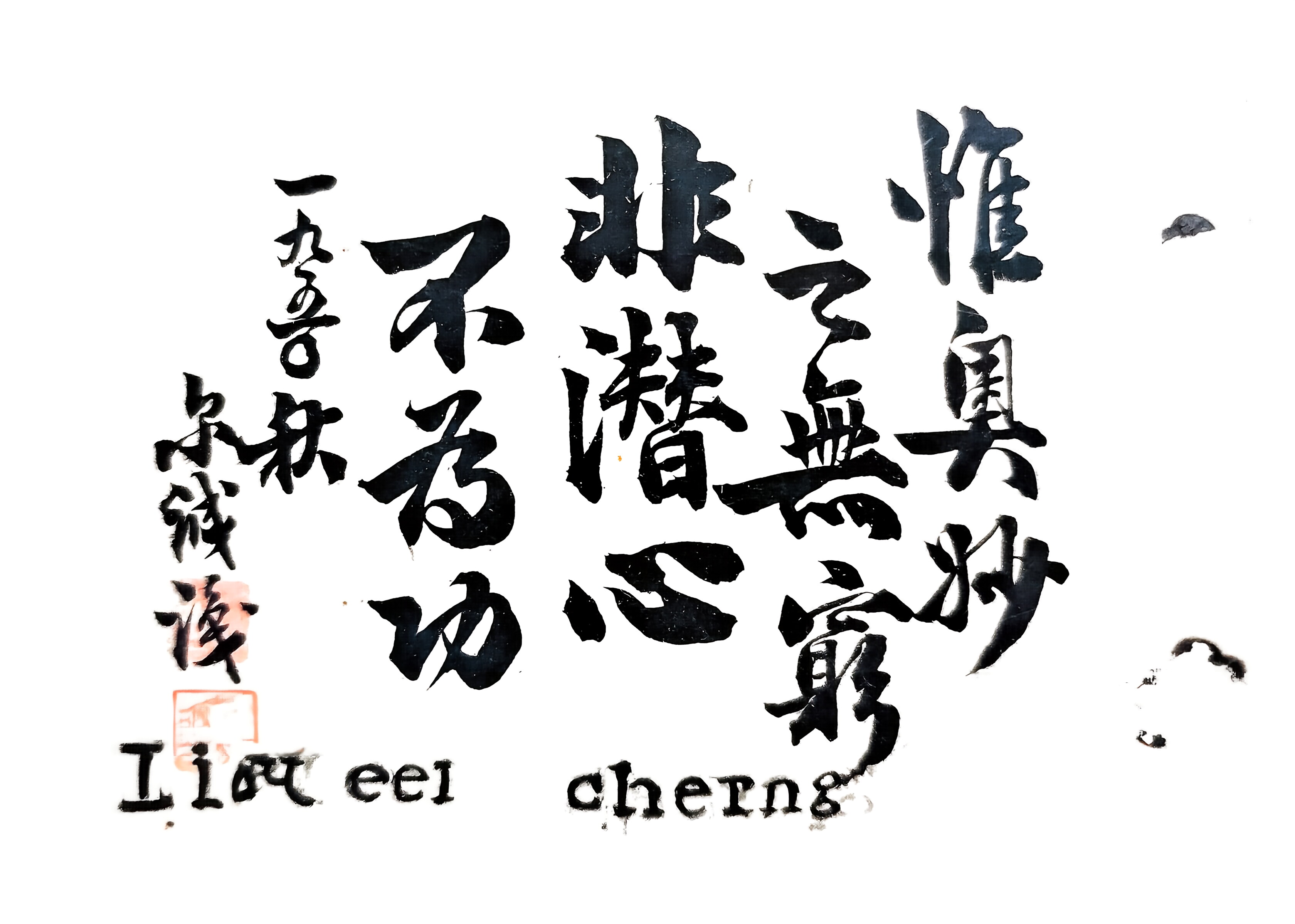
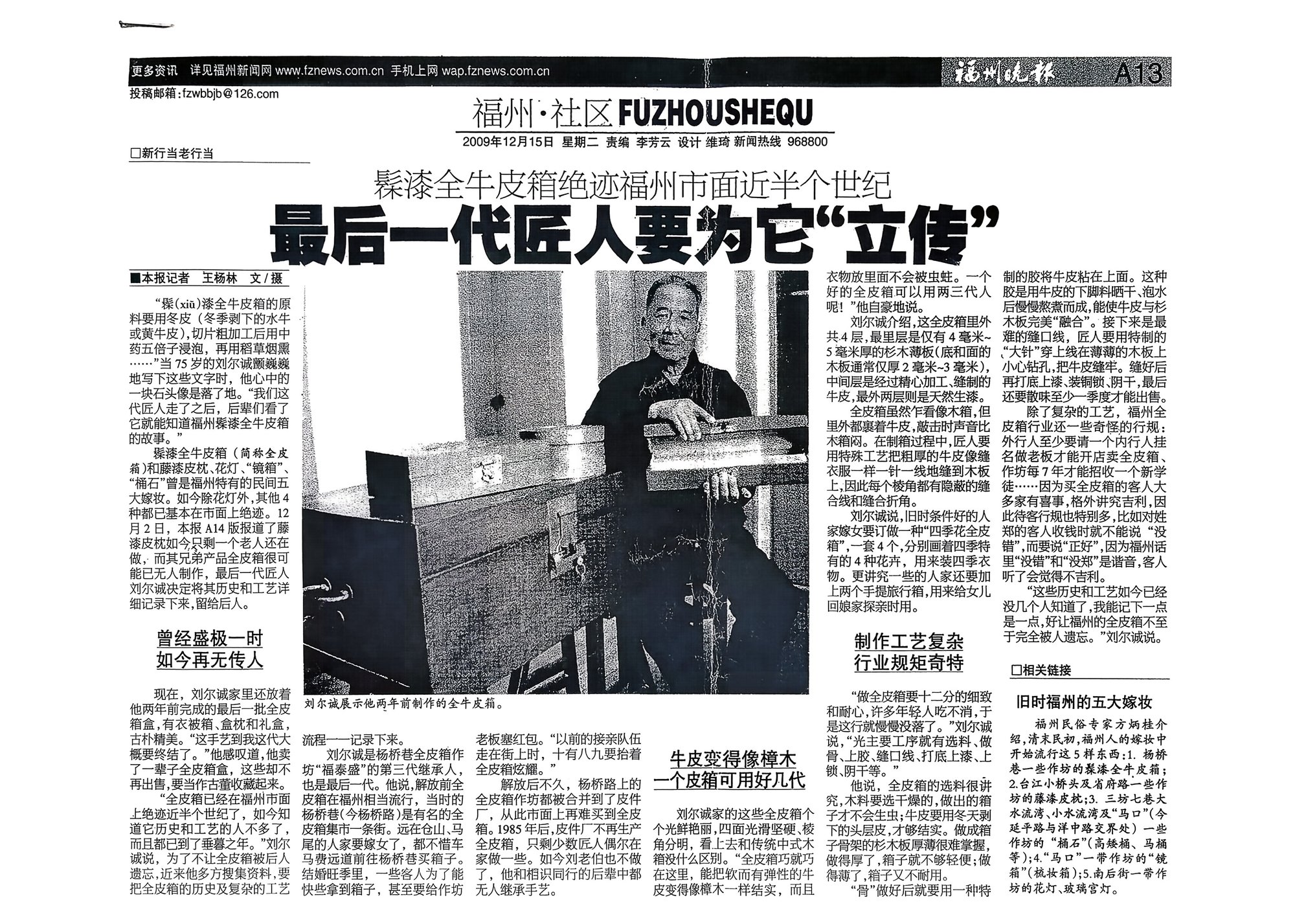
The lineage currently recorded by xiuqi.art runs through Liu Jinpeng, Liu Shuiguan, Liu Ercheng (1932–2024) and He Wei, who became Liu Ercheng’s apprentice in 2010. The craft entered the Gulou District intangible cultural heritage list in 2016 and the Fuzhou municipal list in 2018.
The historical archive is still being revised. Where documentary evidence is incomplete, xiuqi.art keeps the claim provisional rather than turning it into a fixed origin story.