He did not become a lacquer artist first and paint on the side, nor did he simply copy paintings onto objects. Long training with materials in a lacquer workshop and the close observation of nature taught in Kyoto painting shaped him together from his youth. The key to Shibata Zeshin is not how many techniques he knew, but how he kept shifting the role of lacquer — between objects, paper and a changing era.
1807–c.1830: control the lacquer, then learn to look
Shibata Zeshin was born in Edo. At eleven he was apprenticed to the workshop of the maki-e artist Koma Kansai II. There lacquer was not a colour in a picture but slow, exact work: coating, waiting, polishing, sprinkling powder and constantly judging the surface. Even when he later painted on paper, he kept a craftsman’s feel for layers, sheen and how materials respond.
He then went to Kyoto to study painting of the Maruyama-Shijo school, which the Met sums up as combining East Asian painting methods with Western-style naturalistic observation. It gave him a second ability: not only knowing what lacquer can do, but watching how flowers, birds, objects and air really look. Workshop training and sketching from life ran side by side for the rest of his life.
Late Edo: lacquer pretending to be other materials
Back in Edo he built his career making writing boxes, inro and food boxes while continuing to paint. The two identities fed each other: a painter’s judgement of form went into the objects, and a lacquerer’s control of thickness and reflection went into the paintings.
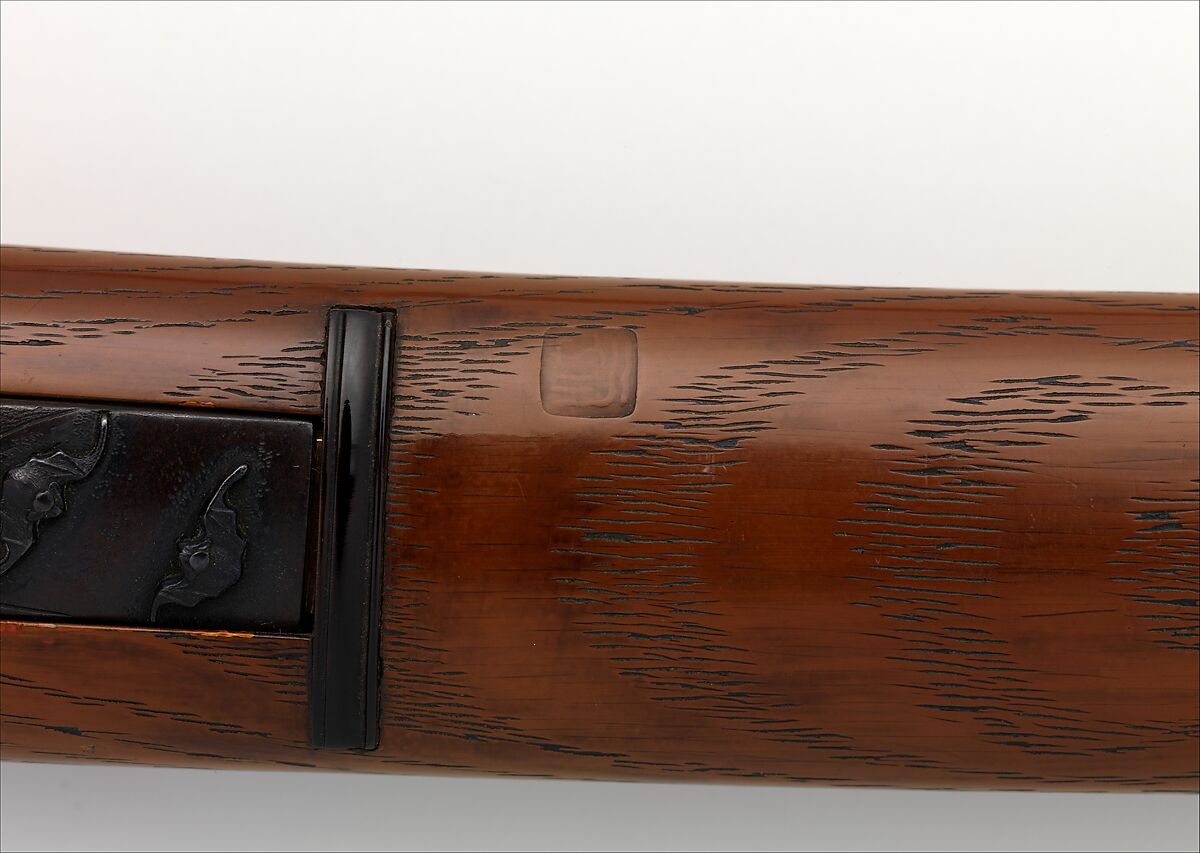
From the same period, see his inro with waves, a homage to Ogata Korin: he carried on older patterns and maki-e lineages while rearranging how the materials relate.
After 1868: old techniques in a new setting
Zeshin began his career in the Edo period and continued working into Meiji. The Met sees him as bridging objects and painting, and as carrying Edo technique and design sense into modern lacquer. It also notes that he took part in several international exhibitions in the late 19th century and was known to Western audiences in his lifetime.
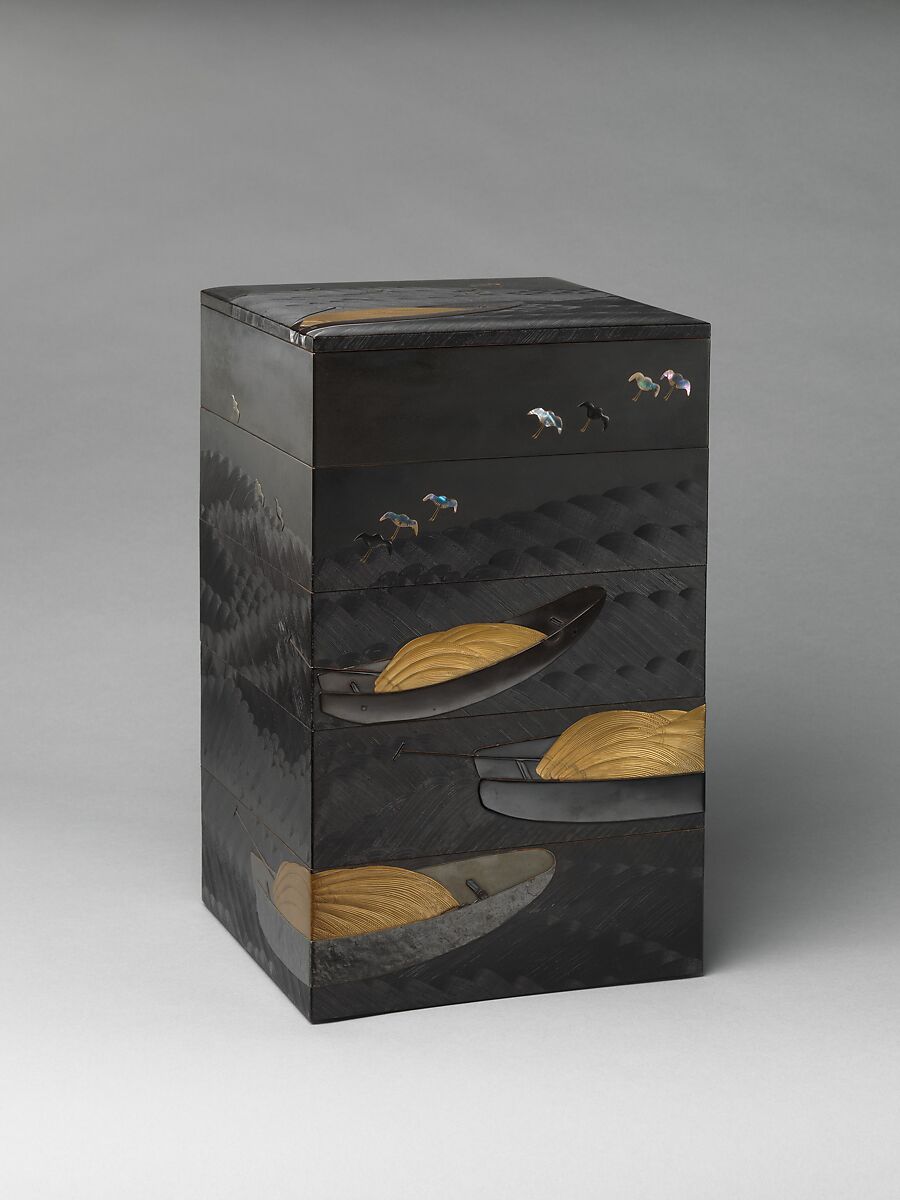
The waves on this box use seigaiha-nuri, a technique he revived: lacquer thickened with egg white or clay and combed into ripples with a bamboo brush. The boats are pewter, the birds mother-of-pearl, the rice sheaves gold maki-e. The materials are not forced into one sheen; each carries the feel of water, boat, bird or plant.
1881–1882: from object to paper
Late in life Zeshin painted with lacquer directly on paper. Lacquer is used to a wooden core; paper is fragile and absorbent, which makes control hard. But free from the bulk of boxes, trays and inro, lacquer could handle empty space, sightlines and passing impressions as painting does. The two works below were made only a year apart and point in different directions.
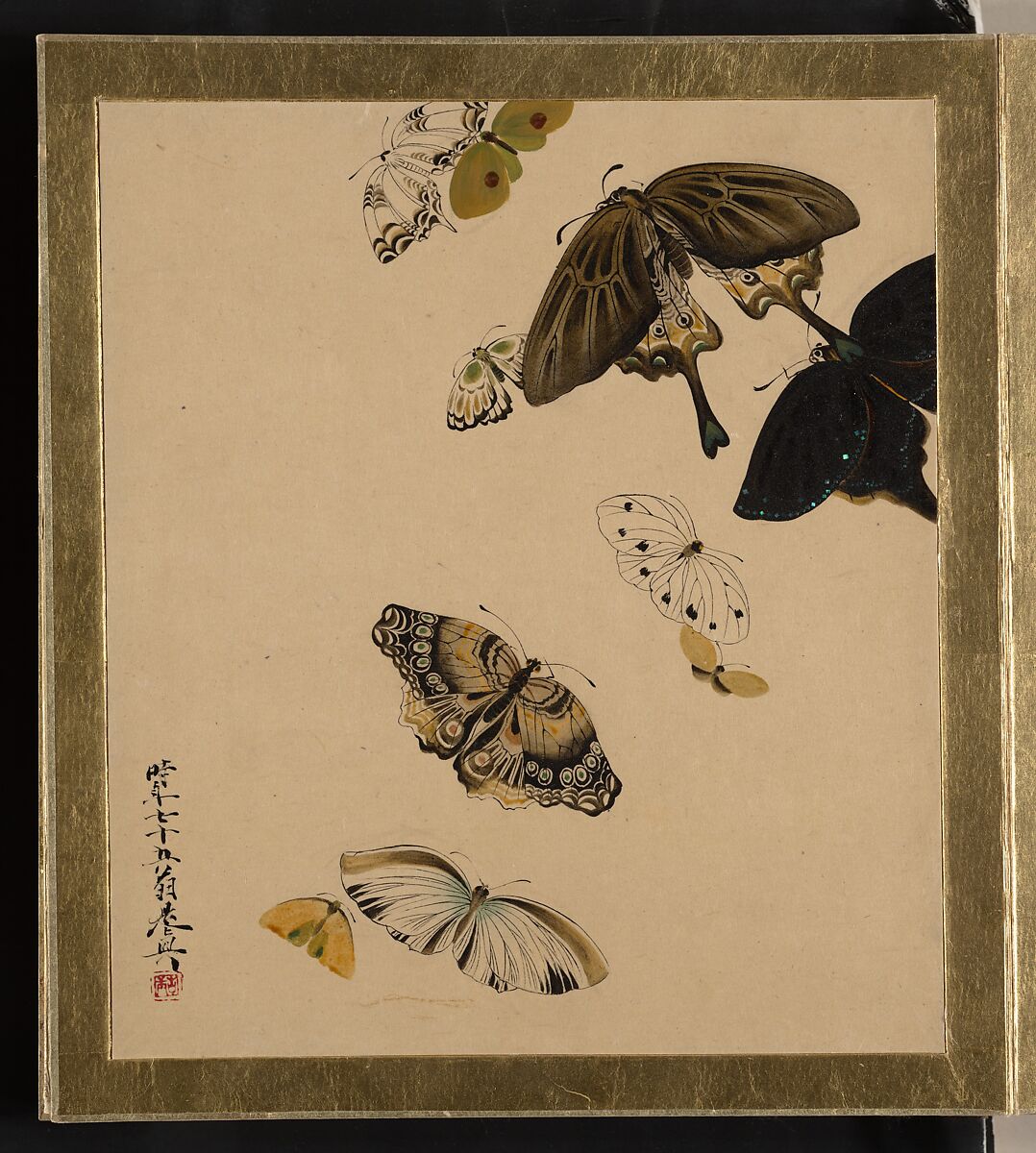
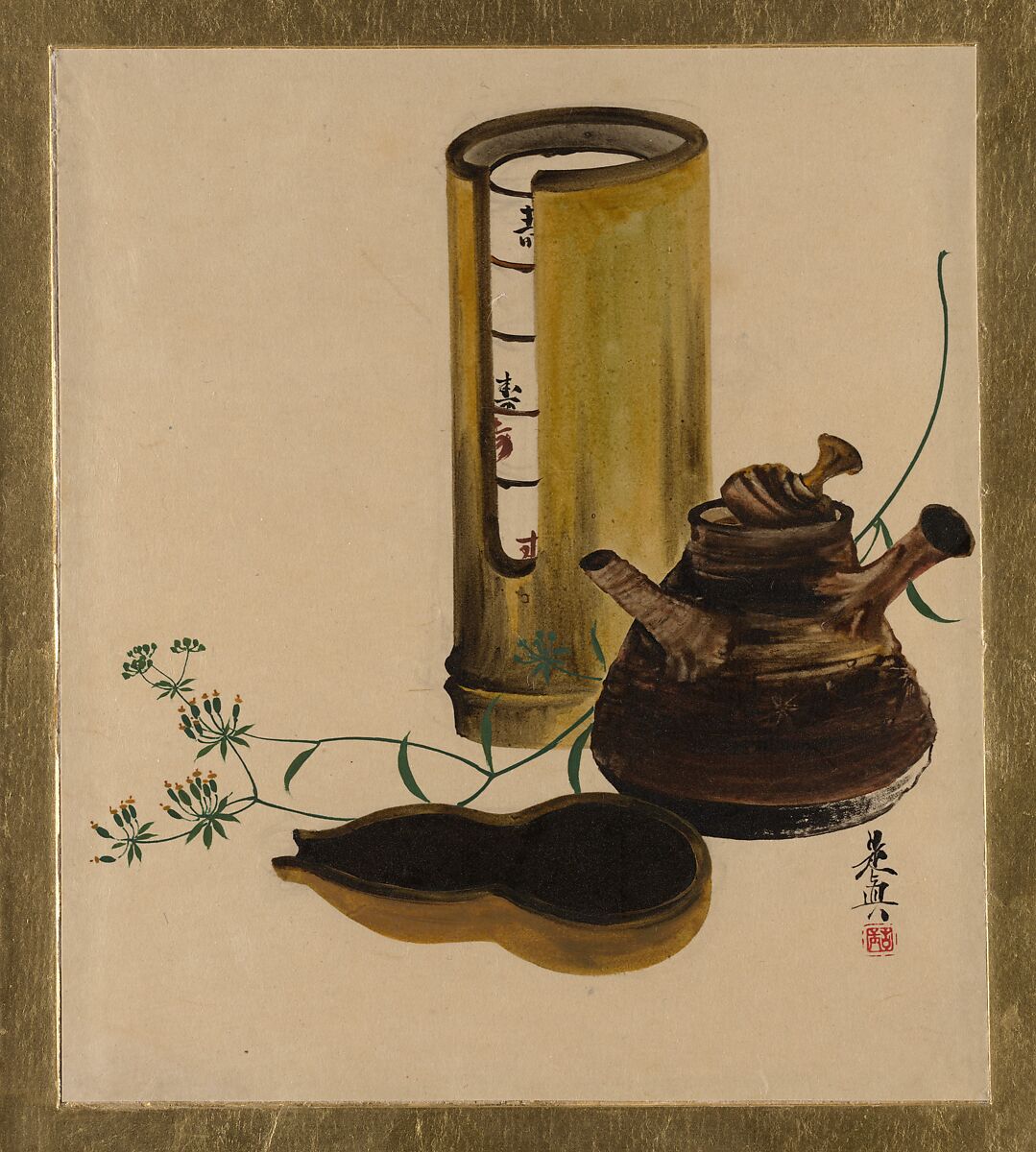
In Butterflies, tiny shell fragments flash as the viewing angle changes, so the wings are not just depicted but actually change the light. In Sencha tea set, outlines, blank space and limited colour stay restrained: lacquer does not always need build-up and gold to be present; it can quietly record daily life.
1880s–1891: everyday things come forward
His late work is still technically dense, but technique is rarely a spectacle in itself. Tea kettles, rice stalks, insects and seasonal plants recur, observed closely and given texture through lacquer layers and metal powders.
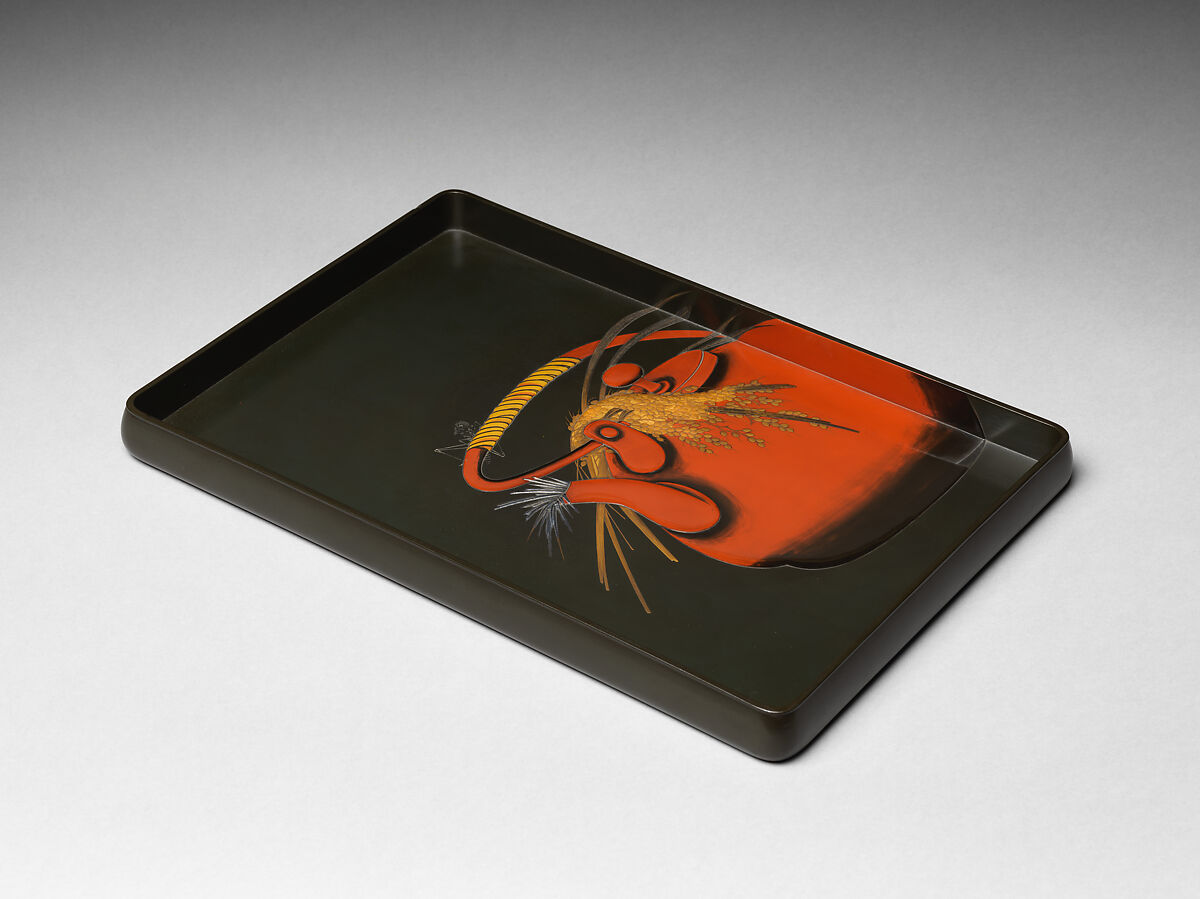
The deep green ground comes from bronze and charcoal powder on wet lacquer, polished to a mottled, old-bronze sheen; the kettle is modelled in red and black lacquer; the rice is raised in layers of gold, silver and greenish-gold powder. Seen only as “difficult lacquer”, you would miss its sense of life: a kettle for making tea outdoors, ripe rice and a resting grasshopper compress harvest time onto a tray.
In 1890 he became the first lacquer artist appointed Imperial Household Artist; he died the following year. Mount Fuji in Winter, from that same year, is ink on paper — to the end he worked as both lacquer artist and painter.
Three threads through a life
- The workshop hand: long practice built his judgement of layers, powders, inlay and polishing.
- The painter’s eye: Kyoto training kept him watching birds, insects and tea things in light and season.
- Adjusting across eras: from Edo to Meiji, private objects to international exhibitions, wood to paper.
Sources
- The Met: tray with rice stalks, grasshopper and tea kettle (with biography)
- The Met: tiered box with taro and chrysanthemums (overview across Edo and Meiji)
- The Met: wakizashi mounting
- The Met: tiered box with boats and plovers
- The Met: Butterflies
- The Met: Sencha tea set
- The Met Bulletin: The Arts of Japan
- National Museum of Asian Art: Carp
- The Met Open Access policy