How can an inro no bigger than a palm show you two horses on one side, then a different horse when you turn it over? Shiomi Masanari placed gold lines, the glint of mother-of-pearl and areas of bare lacquer on different faces of the object. Following the inro under his name, and then the Mount Hira writing box in the Tokyo National Museum, shows how painting and poetry found their way into objects meant to be held and opened.
Making inro in Kyoto
The Tokyo Fuji Art Museum describes Shiomi Masanari as a mid-Edo inro maki-e artist in Kyoto, 1646–1719. The museum adds that he was versed in waka poetry and skilled at painting, and singles out his togidashi maki-e (burnished-out maki-e) as especially admired.
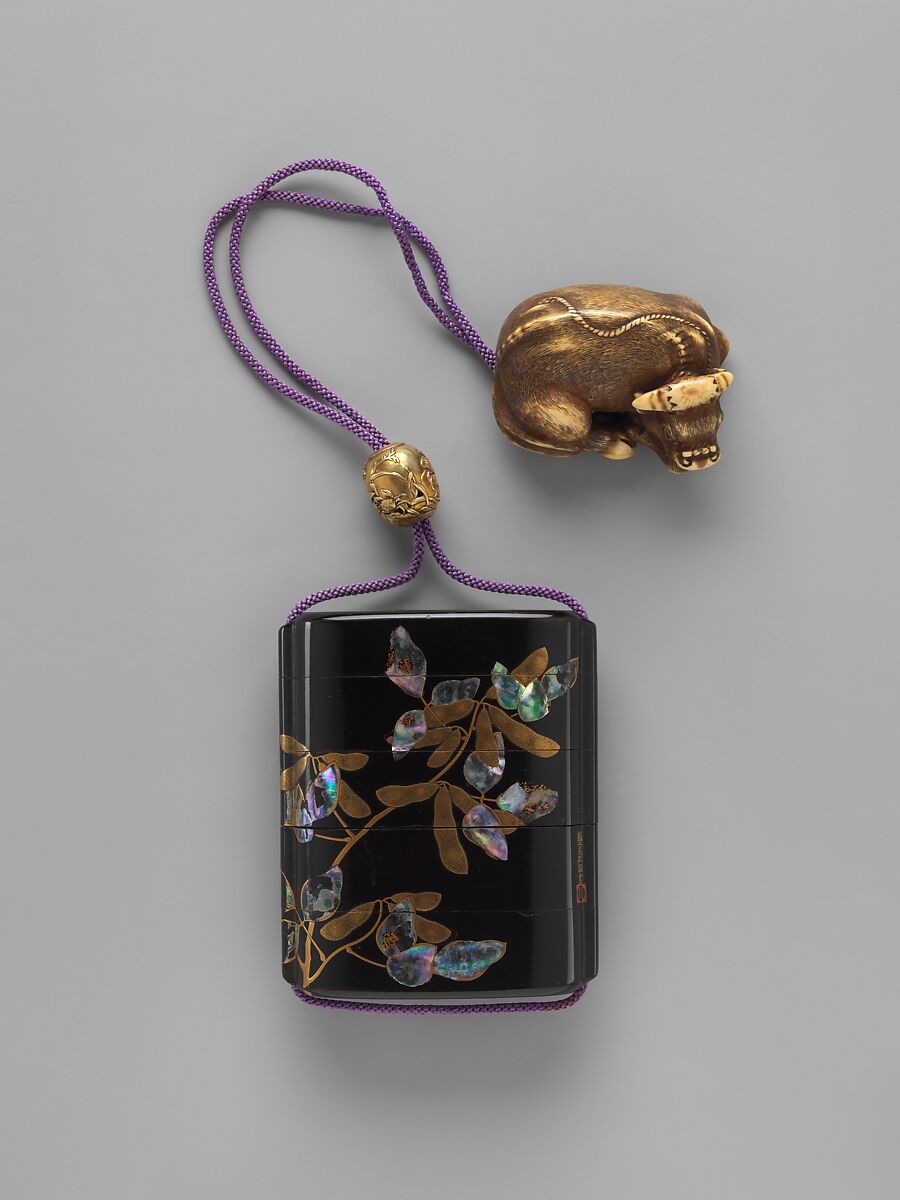
An inro is a stack of small compartments, worn hanging from the sash on a cord with an ojime bead and a netsuke toggle. The Met’s inro with bean vines and moon comes with an ox-shaped netsuke signed Ran’ichi, so the set shows lacquer painting alongside other crafts.
The horse inro: two pictures, one object
On the front of the horse inro in the Tokyo Fuji Art Museum, two horses are outlined in gold and mother-of-pearl, with plenty of black lacquer left open. On the back, a single horse with lowered head fills the centre, and the bright material of its legs and tail follows the curve of the case.
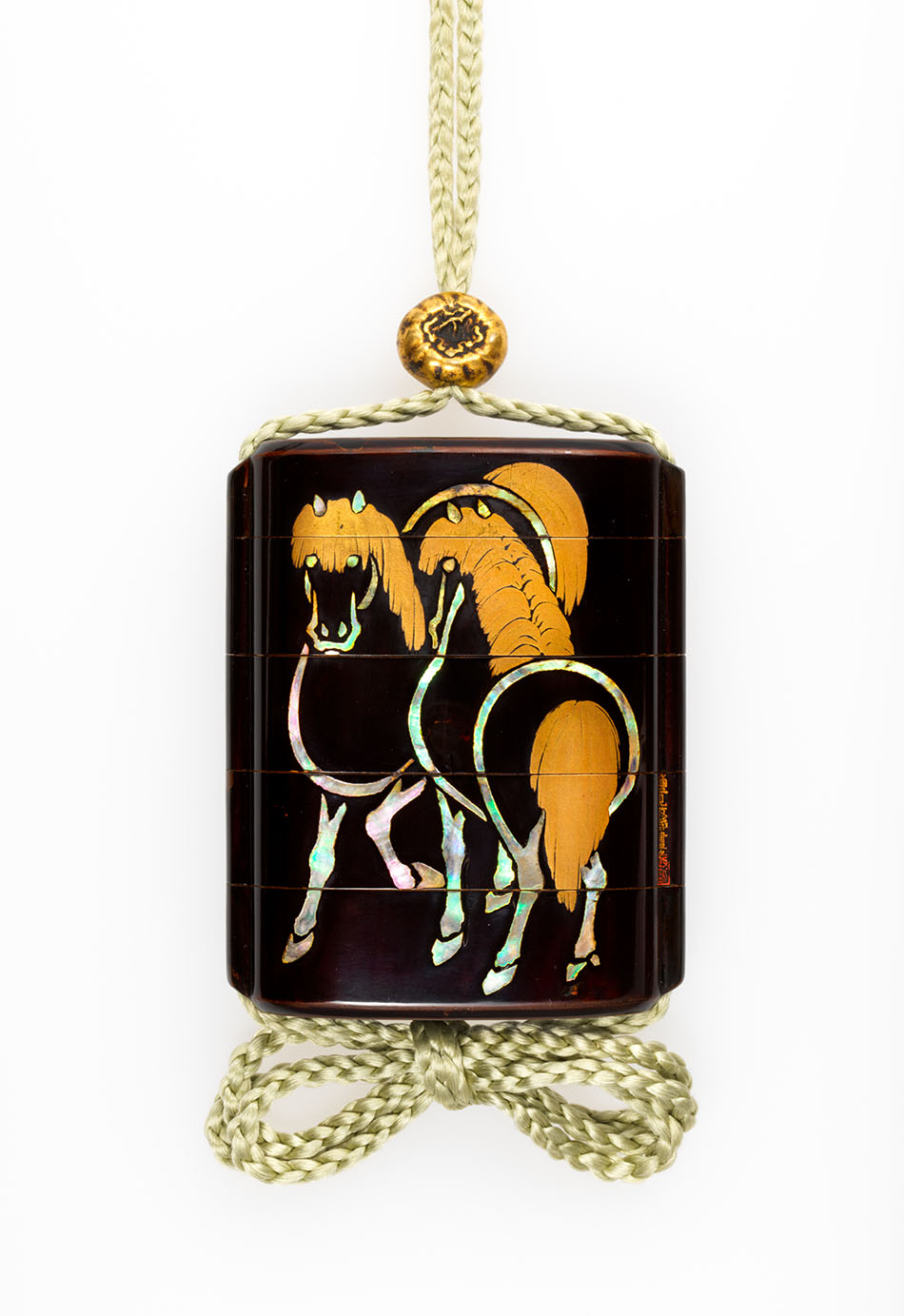
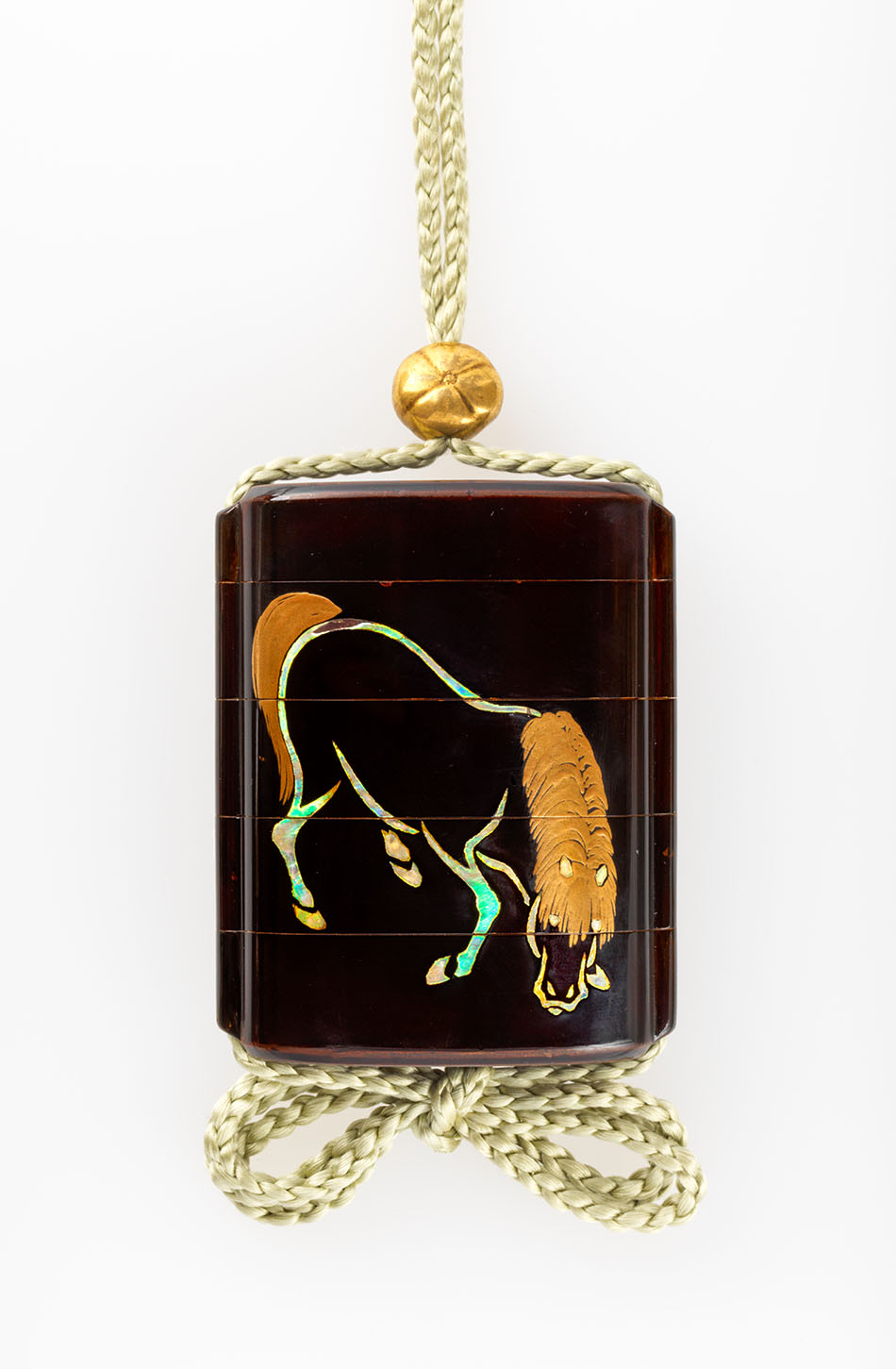
Turning the case becomes part of reading it: the front shows two horses overlapping, the back narrows attention to one. The picture never leaves the form of the inro; it turns with the object in the hand.
Bean vines and autumn flowers
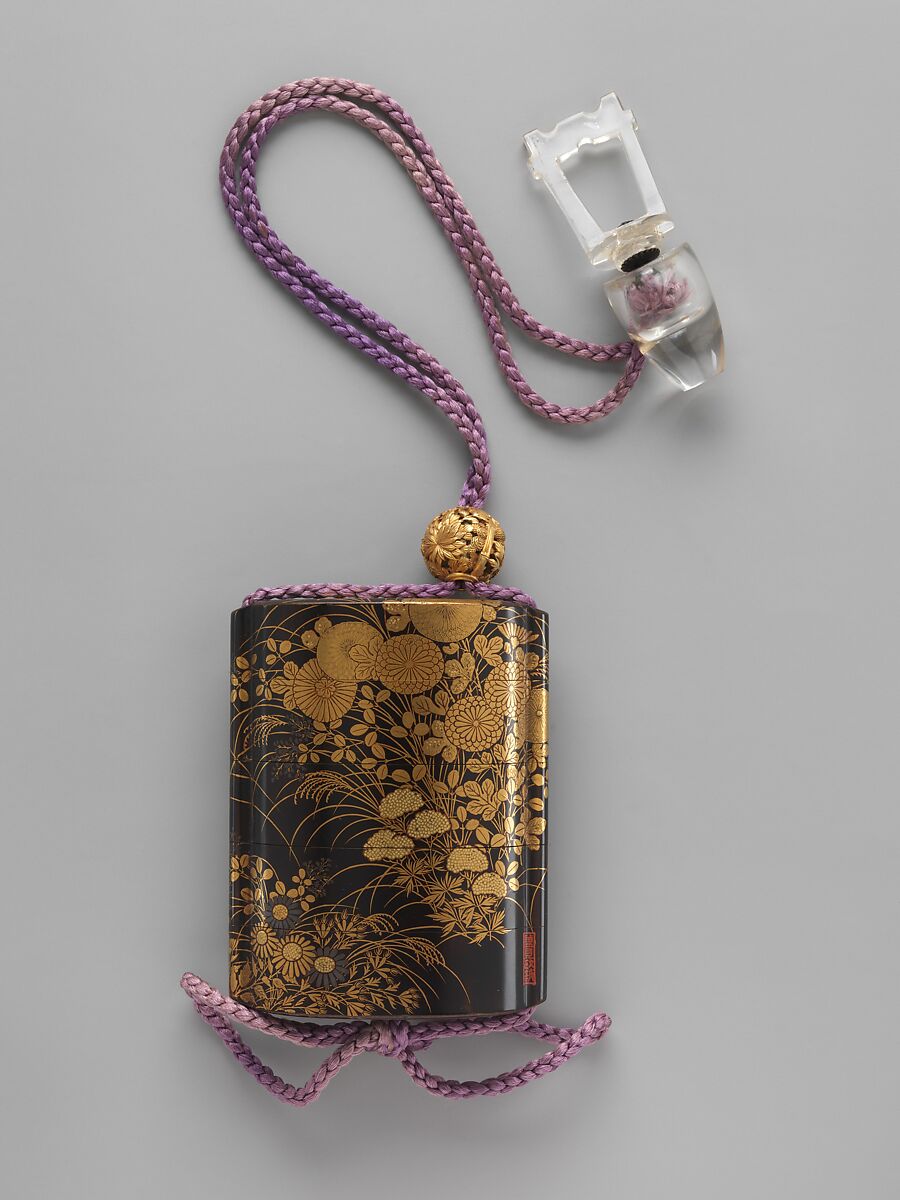
Two inro in the Met, both early 18th century, offer another comparison. The inro with bean vines and moon spreads vines across black lacquer, with mother-of-pearl that changes colour in the light. The inro with autumn flowers arranges many autumn plants in gold, silver and blue lacquer on black. Same period, but different materials and density.
Mount Hira: poetry in a writing box
The Tokyo National Museum holds a writing box with Mount Hira in maki-e that bears Shiomi Masanari’s name. The museum describes Mount Hira and Lake Biwa on the lid, the pine of Karasaki Shrine on the west shore inside the lid, and a waka poem written in gold maki-e on the lacquer case that holds the box. Mountain, lake, boats and verse are not crowded into one place; they appear on different surfaces as the box is opened.
The museum considers the piece a fine balance of near-and-far composition, low-relief usuniku takamaki-e and togidashi maki-e, bringing the mood of the Shin Kokin Wakashu anthology into the landscape on the lid. Compared with the inro, the box gives a wider picture surface and lets inscription, storage and writing tools all take part.
Three threads
- The object turns. Two-sided designs and the compartments of an inro set the order in which you see things.
- Lacquer keeps the light moving. Gold and silver maki-e, shell and blue lacquer reflect differently on black.
- Painting and poetry in everyday things. From inro to writing box, the images stay attached to objects you hold and open.
Sources
- Tokyo Fuji Art Museum: Shiomi Masanari, artist and collection
- Tokyo Fuji Art Museum: inro with horses
- The Met: inro with bean vines and moon
- The Met: inro with autumn flowers
- Tokyo National Museum: writing box with Mount Hira
More: Japanese lacquer artists · Nakayama Komin · Japanese lacquer techniques